It’s a wonderful day to talk with Jolene Wright!

Grab a Coffee and Settle in: A Conversation with a Lifetime Educator Raised by Activists

Jolene Wright has dedicated her life to community service and advocacy for people of all ages. With a lifelong commitment to education, shaped by parents who were deeply involved in the civil rights movement, advocacy and teaching are truly in her blood. Now in her 70s, she reflects on a lifetime of work—first as a Head Start teacher supporting young children, later working with adults at The Endwright Center, and now continuing her impact as a substitute teacher for Monroe County Community Schools during the school year and as a staff member at the Boys & Girls Club in the summer. Recently, she celebrated the groundbreaking of the Reverend Doctor Marvin Chandler Early Learning Center, named in honor of her late father, a Bloomington native and civil rights advocate.

Subbing in Jolene’s classroom on Kirkwood (on the backside of what is now the Habitat for Humanity administrative office) in my early 20s was my first impression of the Head Start program. Head Start is a comprehensive program that supports children’s education, health, and family well-being. Its success has been proven time and again. I quickly fell in love with its mission—helping children build a strong foundation for learning by fostering their social, emotional, and cognitive development. I spent time subbing in her classrooms and was struck by her no-nonsense, practical, and genuinely loving approach she had in her preschool class with three, four, and five-year-olds. She helped me realize a simple truth: kids can’t be ready to learn if their basic needs—food, play, creativity, and security—aren’t met first. With over 50 years of experience in education, she has a special expertise, wisdom, and true understanding of children. In 2012 she left the program because of a condition that resulted in spine surgery. Since her recovery, she has expanded her service work outside of Head Start.

Sitting at my kitchen table, we sipped tea and snacked on chocolate-covered almonds and raspberries. We discussed why kids are expected to form lines in school, the emphasis on conformity despite children’s natural tendencies, and how rules often suppress individuality. We also laughed about the irony of paying for expensive admissions (that’s me) just so our kids can play inside somewhere during flu season instead of bundling them up for germ-free and dollar-free play, and why has it taken so many years to say goodbye to Red Dye anyway?

She spent her own early childhood years growing up in the 1950s in Bloomington, Indiana with her parents and two sisters, close to a grandmother who lived by Banneker Center and another grandmother who lived on 11th and Adams. Jolene’s childhood cohort was a group of around 10.

“We would walk from my grandmother’s house and over the railroad tracks, even though we weren’t supposed to. We had a lot of cousins, who were more like siblings. We’d have Sunday dinners, there would be 30 people there. There was this big tree people would sit under when it was hot. People would ride by and wave and blow their horns and sometimes people got out to talk and hang out. It was the coolest thing. It’s important to have older people around. When I was a kid, older people took care of young people and the babies. The young people got information from them. We don’t have that so much anymore. When your family moves away, you lose part of that, those stories are not shared. You don’t learn the ways of your people.”

In 1959, her father and mother, Marvin and Portia Chandler did move the family, so Marvin could attend seminary school in Rochester, New York. But the family connections remained strong with extended family in Bloomington. Jolene was only in second or third grade when they moved. “They were a young, dynamic couple. I feel like they were ahead of their time.” 
*Open to the Moment, a beautiful documentary about Reverend Doctor Marvin Chandler’s life, music, and career can be found on YouTube, and features interviews with Jolene and her sisters. https://www.pbs.org/video/reverend-marvin-chandler-open-to-the-moment-cial78/

“When my mom missed home, my dad would drive our little Renault to Bloomington. We did that at Christmas, Easter, and in the summer”. Once Marvin graduated from seminary school, the family moved to Leroy, New York. Leroy was a town that had a factory where Jell-O was made.

“The whole town smelled so good, it was lovely. We lived on a corner with my dad’s church right up the street and a 1700’s cemetery across the street. The town was so old that it had stoops throughout where people could climb up to get on carriages. All the kids knew each other and played together, black and white.”

The family lived out east through Jolene’s childhood, with her father preaching and her parents doing activist work. After high school, Jolene attended Clark Atlanta, a historically black college, for two years. “HBC’s weren’t the same as they are now. They were really poor; they struggled a lot.”

She returned to Rochester, where she began her teaching career with Head Start. During this time her father was called upon to help negotiate the historic uprisings at Attica Prison, where inmates were protesting poor conditions and inadequate care.

Reverend Doctor Chandler worked for the Rochester Area Council of Churches, an organization of black and white ministers dedicated to advancing civil rights. He also collaborated with local companies like Xerox and Kodak to develop job training programs for the Rochester community.

In the mid-1970s, her father was offered a job in California’s Bay Area. “He asked, ‘Do you guys want to come?’ and I said yes. So we all packed up. I worked at Head Start in California and loved it.”

Jolene met her husband, Cornelius, while living there. He worked for a program similar to Bloomington’s Community Action Program (CAP). Already a father of two sons, he and Jolene later expanded their family with another son and a daughter. Several years later, they moved back to Bloomington, where Jolene would return to work at Head Start in the 1990s.

On marriage: “Marriage is like a book and there’s chapters. You go through pages and pages and you’ll get to a new chapter. Sometimes it may not be your chapter. And eventually you get to your chapter.” Jolene and her husband spent some years living separately. They are living proof that there isn’t a one size fits all relationship. The couple built a Habitat House together in recent years and work together for the Boys and Girls Club in the summers. 

On being a mother: We discussed how women often take on caretaking responsibilities. Tasks once considered “women’s work” are now recognized as essential to our family’s well-being and safety. “Women have always gotten up early, made sure we have food for our family, we make sure our house is clean or taken care of, we are the last one who up at night to make sure everything is locked down and taken care. Woman are realizing how much power we have. Women have empathy for each other, our children, and for a collective. We don’t want to see war; we don’t want to see strife. We want peace.”

On being a grandmother: Most of Jolene’s grandchildren live in Bloomington, some in Kokomo, IN. She has had 13 altogether. “We always have a lot of fun.” Her 10-yr old, grandson, Gunner, built a fort during the construction of her Habitat House. “They like to come over and hang out and I love to have them. The big kids come and help. The little girls go to church with me. I try to do things that will enrich them, the same things I did with my kids when they were little like being outside, building forts, catching butterflies, and bugs.” She plans to camp with them this summer.

Raising kids in Bloomington 35 years ago vs now: “It’s a lot different. The university and town were not as integrated. We still knew most of the neighbors. My kids grew up in the Cutter’s era. The town has grown so much and blended so much more.”

On food and nutrition: Jolene is a once-a-month shopper who only runs back to the store for something special. “I don’t go back to the store and buy more chips or more cookies or whatever. I buy items and separate them. Even when my kids were little, I made granola and cookies. I baked, so they had snacks. With four kids running to the store to get snacks would have been a lot of money and the food I could make at home is better!”

Jolene has worked in education since the 1970s and strongly believes that nutrition (plus environmental pollutants) have a huge influence on children’s behavior.  Two thirds of the kids she works with today have been identified as having behavior issues.  “I think a lot of it has to do with diet and the air. We have killed and are killing our planet and it shows in our children.”

This sent me down a rabbit hole and aligns with evidence from pediatricians and environmental experts who contributed to “Children and Environmental Toxins: What Everyone Needs to Know” by Mary M. Landrigan and Philip J Landrigan and “Silent Scourge: Children, Pollution, and Why Scientists Disagree” by Colleen Moore.

On education: We touched on how certain counterintuitive practices like strict rules of conformity never seem to go away. “You know what bugs me so much, and it’s always done? I hate seeing kids at school having to walk in a line. We don’t walk in a line anywhere. So why make kids who are all different people walk in a line? There’s this idea of conforming. But everyone, including children, has their own personality. As long as they’re within boundaries, let them be themselves. Some children aren’t their true selves in school, and that’s a problem. It’s part of the reason they struggle so much. A good teacher, and most of the teachers I see are good, knows how to let kids be themselves while still maintaining control in the classroom.”

On work: “You’ve got to have fun to keep your employees happy. If your people are happy, they will work better. And that was the philosophy at Head Start. We had retreats. We got business taken care of, but we also got to know other people on different levels, not just supervisor-employee. You need to know your employee as a person, so you can have empathy for them, and they can have empathy for you as a supervisor. You can balance each other. That has an effect on the clients you serve. Community is everything.”

Jolene’s work relationships grew into a fun annual gathering, a witches’ party with some of her closest Head Start colleagues, one of whom had a wonderful cabin on the river in Shoals. “We could walk across the street to the river. We’d go twice a year, in October and then again in the spring. We would sit, drink tea, burn our firewood, and wear our witches’ costumes.”

Jolene has devoted her life to service work, including a significant tenure as a federal employee. However, it’s important to recognize that many service roles fall under small nonprofit organizations, which often lack the resources to provide retirement benefits or pensions. As a result, many lifelong service workers, including Jolene, find themselves working longer than others due to financial constraints. Although Jolene remains passionate about her work, she is now ready to slow down.

On simple joys: “I love to garden. I pulled my seeds out yesterday. When I work in the garden I don’t wear gloves, I have to have my hands in the dirt. I’ve been planning my garden. I can start my lettuce and spinach in a couple weeks. I have raised beds, so I can use plastic to make a greenhouse. And I like to camp.  Nature energizes me. I like the water, but I don’t have to be in the water, but I have to have the sun on me.”

On community involvement (as if she needed to do more): “I sing in the church choir. I’m one of the Pips, I’m not Gladys I never sing the lead, I always sing the background. I do kid’s Bible study on Wednesdays, and I’ll take care of the flowers on the altar and then the flowers outside.” She works with the missionary group too. “Church has always been a part of my life.

In summary: Stories are important.  “I realize what kind of life I had with my parents and life in general. It’s been very special. I have had a diary since I was 10. Usually, I write on New Year’s or on a special occasion. It’s important to write things. I wrote when each child was born, when each grandkid was born, and what happened.” 

Thanks for sharing your stories with us, Jolene!
Grab your favorite cozy drink and meet Amy Beck!

Amy Beck has a natural gift for starting meaningful conversations. Her presence and kindness help open up important discussions, and she has a unique ability to articulate even the most complex emotions and issues. At 47, I always feel a sense of excitement when I connect with someone on a deep, genuine level. Amy makes you feel like she’s a childhood friend—the kind you would have shared your best secrets with during a sleepover.

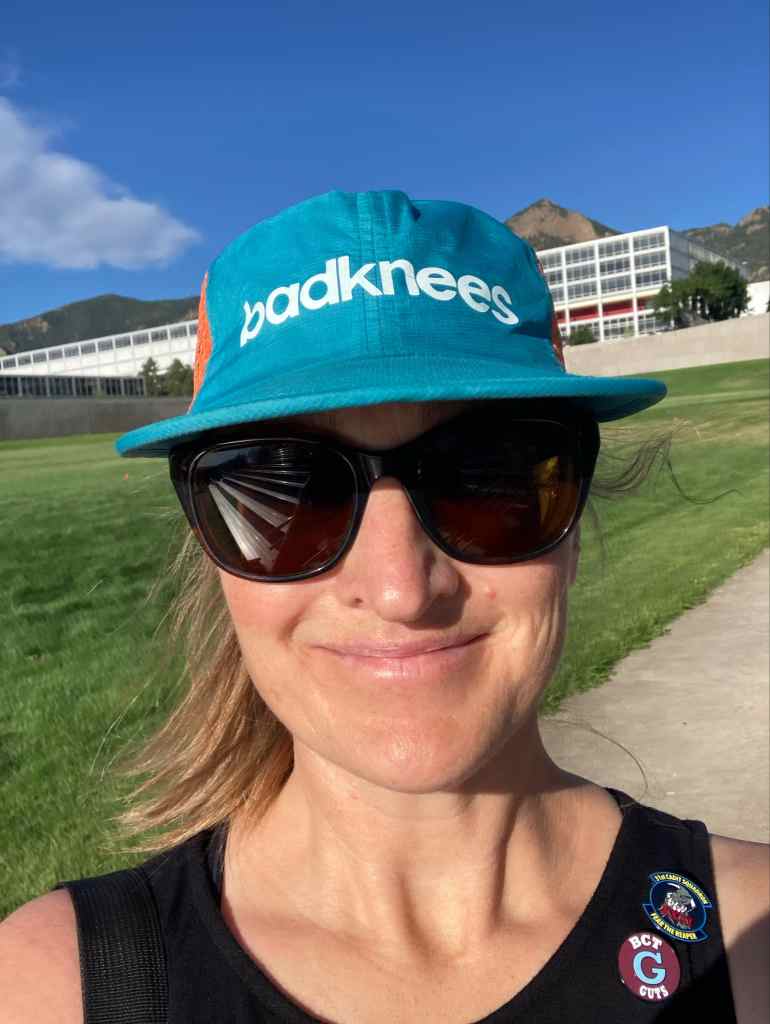
I felt so lucky to sit down with her and discuss a wide range of topics, from her doula business, Olive Tree Birthing, to her interest in supporting public schools (her and her husband, Jim who owns Bloomington based badknees, are both former public school teachers). We talked about walks in the woods, family pets, the importance of being vulnerable with kids, and our shared love for Practical Magic, fried tofu, and Diet Coke. We even explored how social media can actually be a positive force for kids. 

I met Amy 12 years ago when we were both pregnant with our youngest children, and she was the programming director for Bloomington Area Birth Services. Since then, our paths have crossed in various ways—at baby yoga, our children’s elementary school (where she has a child in the same program as mine and serves as the PTO president), music events, and on social media.

On discovering doula work and planting roots in Bloomington:
Amy came to Bloomington for college in 1998 and graduated from Indiana University with a degree in special education. After graduation, she returned to the northwest suburbs of Chicago, married her partner, Jim, and taught for a few years. Later, they moved to Vermont, where they both continued teaching.

The year after their oldest child was born in Vermont, Amy stayed home and developed a strong interest in pregnancy and birth work.  She shared, “I knew there was something out there that was labor support.” She learned about birth doulas and how the role provides emotional, physical, and informational support. Amy reflected, I thought, I could go to someone else’s birth and I could be invited into that? And secondly, that could be a job? It blew my mind that labor support was something I could do professionally.” 

With her first baby, she didn’t have a doula. Amy and Jim were living in a housing co-op in Vermont. “The night I was in labor everyone in our shared house had left to go to a wedding in up-state New York. Jim and I stayed back because I was in labor. It was magic. With Jim there, I felt like my needs were met, but my particular story was that there was a lot of assuming that labor would get much harder, so there was a lot of putting off the notion that I was in the labor that would get me my baby.” 

Not long after, the couple decided to move closer to family in Illinois. As IU graduates, they felt drawn to Bloomington and chose to settle there, putting down roots and raising their family in the home where they still live today.

In 2008 Amy and Jim’s second child was born in Bloomington. “The first year in Bloomington (after moving back) was so lonely, I didn’t know anyone. The person closest to me was my midwife, who I saw during my appointments and the teachers and staff I worked with at the middle school. It was very different from now, where I have a community. Even though I attended a doula training and was preparing to become a doula myself during the pregnancy, I did not hire a doula for our home birth. Our income was low, I was making a teacher salary and my husband did tech support at IU. We didn’t have a lot of money. I think it felt inaccessible to me. It was overwhelming to know how to invite someone else in.”

“During my third birth, I did hire a doula. I wanted someone to tend to me while Jim could tend to the kids if necessary or to have someone else on my team. It felt really celebratory the third time around. It was great”.

Amy explained that a birth doula is someone trained in the birth process, helping the mother become familiar with and understand what to expect during labor. The doula provides education and helps normalize the experience for both the mother and the birth partner. They offer emotional and physical support throughout labor. Emotionally, the doula offers encouragement, reassurance, and a calming presence. Physically, they help the mother feel more comfortable through touch, suggesting position changes, and encouraging movement. “Sometimes being a doula is just being present to what is and not impeding on the process.”

Amy officially started Olive Tree Birthing after she completed her doula training and certification requirements through DONA International. Since beginning her birth doula work, her offerings have expanded.

“I had learned about end of life doula support through other doula groups. I heard about this program at the Unitarian Universalist Church in Bloomington that was offering a training for people who wanted to volunteer to vigil at life’s end.” They call themselves VALE (Vigiling at Life’s End).The nurse and staff in nursing homes, hospitals, and rehab centers can identify these people who are actively dying and cannot sustain life. “That spoke to me, because it is so aligned with what we do in the birthing process. We are patiently waiting for this physiologically occurring transformative event to happen and you can’t speed it along, you can’t change it, all you can do is be present with it.” In 2019 she pursued a certificate as an end of life doula through the University of Vermont’s online program.

“I was thinking this is something I can offer my community and do. Currently I don’t work with anyone who is actively dying or has a prognosis of death within the next six months. But I am working with a friend who I came to meet through her daughter who was looking for some kind of support for when the time comes. So my relationship is this beautiful friendship. We see each other once a week and we hike in the woods. We talk and she is actively living. That is what we are focusing on. So the idea is that when my friend does show signs, she does have an end of life transition that we have some warning for, I could then be a support for her and her family. But that’s not where we are right now. Right now we are building our friendship and it’s amazing.”

On raising three kids at varying stages (one young adult, one teenager, and one preteen):
“They’re at such different stages. All three kids are so different. You’re parenting individuals. They have their own opinions and thoughts. When I think about my sons I think about the recognition that I’m a mom of three kids. My daughter has moved onwards and is doing her own thing. What remains is seeing a part of the family and recalibrating two children at home who are in very different seasons and who are different people. I want to do right by them. I want my energy, intention, and focus to be on them, because I’m realizing now that we don’t get forever with them living in your home, in the next room. It’s like a limited amount of time so I feel more sentimental, especially with my high schooler because he only has two years left in high school. As parents we get this period of time with them, but for the majority of their lives they are in other places with other people. I think about how lucky those people are going to be to get to know our children. I’m sad I don’t get to be those people, their colleagues or their roommate. That letting go is pretty prominent.”

We discussed how parenting is full of surprises and the importance of being present to support the decisions our kids are making. Her oldest is now in the Service Academy. “I was surprised because we don’t have any military in our family besides grandparents who served in World War II and service wasn’t on our radar. Our daughter was excited to learn about being a pilot and planes. She told us she was looking into the U.S. Air Force Academy in Colorado and applying to other schools. She took the initiative to do all the applications. She did it all independently. It was challenging because I consider myself a pacifist, but I know there are times when we want a group of people to stand up for those that need defense or care. And that can come in the form of the military, which can bring discomfort. But this thing about parenting that I’m realizing is that there comes a point where I don’t get to make the call, she does. I either get to love her, support her, and be there for her for the times of her challenges and joys or I could be very rigid or make this about what I believe or want for myself. I’m figuring out the adult/child relationship. One of the things that I think brings me comfort is that when change happens within systems, I believe it happens because of the people in those systems. I’m really just believing that her integrity, her ethic, and her moral compass will help to be change where it needs to happen.”

Although Amy’s knowledge and experience make her a valuable resource on parenting, she shares, “I don’t like giving advice. If something is going on, oftentimes I don’t want to share what I think they should do.” This philosophy proves to be consistent for her for the brand new parents she works with too. “The thing about being a birth doula and childbirth educator is that I share a lot of personal things but I don’t ever want to convey that I’ve got it figured out. My measurements of being a good parent can never be accurate. I don’t even know how you could judge a good parent versus not a good parent. Obviously there are some very distinct things like have you fed your child, have you provided some comfort, care, and love? But otherwise I think we tend to have a lot of opinions about how we should do things as parents. And there are so many different ways to be a human in this world. There’s not a one size fits all in parenting.” 

On the importance of being vulnerable with kids:
We talked about a common theme in our relationships with our own parents: they often appeared like authority figures, and we rarely saw them being vulnerable. When they were upset, we sometimes didn’t understand why, which made things confusing, especially when we were left guessing about their thoughts and feelings.

 “I remember if I would get in trouble for something, feeling like how much trouble I’m in for this behavior is unproportionate to what I did. Pulling back the layers I realized what I did reminded them of other ways they felt in their life. When we are disproportionate with how we feel with other people, it’s really confusing, especially to our younger children.”

Last summer one of the chickens Amy and her family raised for eggs got sick and passed. “Our chicken was sick and I had been on the phone with my brother sobbing and crying. Then I was talking about it with my husband and friends of ours. Our son was in the room with us and he’s 11. I was being very honest and open about my fear for this chicken, my feelings of guilt for being a meat eater, while also being devastated that my chicken might die. He was right there, I turned to him and asked, how are you doing with this, do you have any questions about what’s going on or any thoughts?  It hit me that I was being vulnerable in my sharing, but I also had a child who was right there. It has stuck with me this last month that it happened because I want to be someone who notices when someone is not doing okay. Especially if they’re not doing okay because of something that I’m doing or saying. It’s just a very humbling part of parenting to know what I’m doing impacts you and how can I be sure to check on that. I’m vulnerable, but you don’t have to take care of me.” 

On supporting public schools:
Amy is a former elementary and middle school teacher. Her spouse taught middle school and high school as well. She is actively involved in our school community, leading parent-led initiatives though the PTO. “I started paying more attention to public education in 2016. I feel like our education system is undermined, the way that it’s talked about by groups of individuals that are more conservative. I feel like it’s really hurting how we can thrive in our public education. We have to keep talking about it. How do we support teachers in supporting our kids? I think the thing that always helps is to ask the question and be prepared to listen to the answer. I think when we ask the question, whether it’s with a birth doula client or postpartum doula client or our educators. It’s providing the space where they feel safe and comfortable to share with you. Sometimes honesty is not what you want to hear. It makes it a little more challenging because it’s not tied up with a bow, like you thought it would be. There’s some discomfort when we ask questions and the answer is not easy to solve and it may not even be ours to solve. It’s hard, because teachers are restricted from what they can actually share publicly. I think they are held to a certain standard of what they’re saying. That makes it really challenging for change to happen if we can’t really hear, or if things are discussed behind closed doors. That’s where people are really impacted, parents or in doula work, the patients who have received care they need to be the voices that are elevating concerns or problems to someone higher.”

On the positive side of social media (for both adults and children):
One thing I admire about Amy is her ability to share authentically on social media, both personally and professionally, without ever seeming like she’s oversharing or airing personal issues. Sometimes her posts are just for fun, but often she shares to remind people they aren’t alone, whether through her own experiences or by promoting events she’s organizing to help others connect. 

“I tend to talk about topics and share because, for me, I’ve gone through hard stuff. I really value people that have shared their story that I can visit even if it’s a video I can watch on YouTube, or reading a blog, or reading someone’s post or comments where I can feel like, oh my gosh I’m not alone or here are some actual logistical ways I can move through it.” 

“With anything I post or share, I ask myself, is this going to be upsetting for my kids? Is it helpful or useful? Is there a reason that goes beyond just sharing to share?” 

We discussed the balance between being authentic and normalizing issues on social media, while also trying to keep kids safe from harmful online content. We both agreed that access to more online support for depression, anxiety, and other serious mental health issues during our own childhood (especially middle school and high school) would have been helpful. The shame and the secrets you think you are alone with can be devastating. 

“The isolation and that feeling that no one understands goes away when you sit down and you go, oh we are aligned in some way on this topic in this conversation. The isolation that comes from it is really scary. I have thought, if only I had known other people are also struggling it would have brought me comfort.”

Just a few things I have learned from Amy via social media:
-She started a Friends in Nature walking group during the pandemic.
-She has a dog named Willie.
-She’s great at advertising school events and attracting community involvement.
-She hosts parent support groups for parents of all ages.
-Drinking coffee is a huge part of doula work!

On favorite family recipes:
“We just got an air-fryer. I make tofu, press it, season it with Braggs or chili oil, or coat it with a light bit of olive oil. I put it in the air fryer for 11 minutes and it comes out amazing. Aldi sells blocks of tofu for $1.59. You can make them up, stick them in the refrigerator.” She likes to add mayo, mustard, or sweet chili sauce. “It’s so delicious, so affordable, and my kids like them. We also make French fries, soak a russet potato, put on a little bit of oil after you chop it, in 10 minutes you have delicious rench fries”. 

“We got an espresso machine for Christmas. I love supporting our local coffee shops, but it’s expensive to sustain that habit. I still visit my local coffee shops, but I am making coronado at home. It’s equal shots of espresso, and equal milk. I feel like if I drink a latte I’m drinking milk flavored with espresso, I feel like if I’m drinking a coronado, I’m drinking espresso flavored with milk. It’s amazing. You sit and enjoy it, you don’t run errands with it. It’s my comfort measure.”

Additional notes on doula services:
A doula is always available for a free consultation. Tandem, a local nonprofit, is a great resource for this. Amy suggests that a doula can meet with those interested to discuss ways to support labor and birth. During the consultation, the doula can explain and demonstrate how a birth partner can assist the laboring person. Some doulas may offer sliding scale fees, and resources like Evidence Based Birth provide additional educational materials.

Thank you for sharing with me, Amy! The depth of your care for people and our community is an inspiration!

https://www.bloomingtonbirthdoula.com

Happy Eclipse Day- It’s a wonderful day for an interview with Linda Lewis.

I’m so excited to share my interview with Linda Lewis. She is an early childhood education leader, business woman, longtime partner to her spouse of 26 years, mother of her two wonderful grown children, and truly a visionary. Although she’s accomplished and strong, she’ll bring brevity and laughter to an intense meeting, and shares the most delicious dish at a potluck. 

A couple of her super powers include making everyday things beautiful and putting the people in her company at ease, she’s a natural teacher. Recently a neighbor’s tree branch fell in her yard. She explained, “A perfect Sycamore branch fell and now I have it on a pulley system in the ECP (Early Childhood Program at Harmony School), so I can hang artwork.” And if your child was/is in her childcare program, you know she has a knack for making your children feel like they can do just about anything. 

Linda has a daughter my son’s age, they were in this same class for most of elementary and middle-school. She was my youngest child’s preschool teacher. And we worked together on various committees and boards at the school during that time. The thing that strikes me most about her is her intentional living style, bringing joy and beauty to what she chooses to do, including how she parents. 

On starting a preschool:

In 1993, Linda saw an opportunity to bring her Montessori background to Harmony School and established the ECP. The program hosts 3-5 year-olds and transitioned from a predominantly Montessori philosophy to a play based philosophy over the years as Linda’s philosophy changed. The experience of the ECP is really special. Children in this childcare setting are truly allowed to play in uninterrupted blocks of time, climb, create art, and run inside and out in bare feet. There’s a natural and comfortable feel, almost an extension of home, unique to a quality childcare setting.

On taking an adventure:

After several years of leading the program, Linda took a year’s absence from work to teach English in São Paulo, Brazil where she lived with her friend, Karla. She worked with executives from global companies, such as Merck and Hertz. They were advanced English speakers, so her job was to have conversations with them, so they could practice their English. “It was my job to talk to people, many of them were interesting people.” 

During Christmas time she traveled home to Brown County in south central Indiana, and returned with her niece to explore more of Brazil. They visited Salvador, a city she became drawn to because of its historic district with cobblestone streets, beautiful old buildings, and rich cultural heritage. She didn’t know this would be the city where she would later meet her husband, Iuri Santos.   

She returned to São Paulo and her niece went home, but the English classes were on pause because it was nearing Carnaval time, which marks the beginning of Lent with parades and music. During that time, many people aren’t working. “I wasn’t learning Portuguese because I was only speaking English, so I decided to go back to Salvador.” She returned by bus and found a short-term apartment there. “I was having fun, I’ve never been fearful. But I could barely speak Portuguese. I had candles and went to buy matches, but I didn’t know how to say matches, so it took forever to try to figure out how to tell people what I was trying to buy.”

While she was there, she decided she wanted to study Capoeira Angola , an art that incorporates dance, music, martial arts, musical  instruments and ritual. She’d been practicing Capoeira Regional in São Paulo, a newer form of capoeira; a pop version of its original form that incorporates a belt system and acrobatics. She found a class and told the mestre that she wanted to study Angola there and Regional at another school to which he replied, “No you’re not. You can’t study here and there, it’s going to be one or the other (in Portuguese).”

Linda decided to take the class and met Iuri who was a contra mestre there. She wanted to learn how to play the berimbau, so she asked if anyone wanted to trade English classes for berimbau lessons. Iuri volunteered. She tried to call his home, but could never set-up the lesson, because she couldn’t explain to his mother why she was calling, she didn’t speak Portuguese. 

It was time for Carnaval. During this time parades feature street bands called blocos, which mobilize the crowds. One can purchase a ticket for the group you want to be part of (picture traveling and dancing throughout the streets with your band). The parade in Salvador featured a bloco from her capoeira class, in which Iuri was the main singer. 

The event starts during the day and lasts late into the night. Because you’re traveling with your group from one side of town to the other, you have to get back to your starting point. Iuri helped Linda find her way back home after the parade. 

Linda’s job in São Paulo was waiting for her, and her lease in Salvador was coming to an end. Iuri encouraged her to keep her things at his mom’s and visit Chapada Diamantina with him, a park in the interior of Brazil. They hiked for several days. Linda shared, “That’s where we decided to get married. I was going to go back home, but we couldn’t go back together unless we got married.” They married one month after meeting at a huge courthouse with three judges who were marrying several couples at one time. 

On returning to the U.S. and starting a family:

Moving back to the United States was a smooth transition. “I already had my own house and job. We already knew other blended American/Brazilian couples. I think our marriage worked well because we had similar lifestyles and are open minded.”  Iuri immediately started teaching Capoeira Angola. He’s also an amazing musician and has led several Reggae bands in Bloomington over the years.

“Two years later, we were going to have a wedding, but decided to spend the money on a trip back to Brazil.” Shortly after that trip they learned they were pregnant with their son. “We didn’t have huge cultural differences because Iuri’s parents were tropicalistas. They were into natural food and super open minded. They are awesome.”

In addition to Iuri, Linda’s amazing birth team included his mother, her friend Karla from São Paulo, a dear friend from Bloomington, her sister who was a labor and delivery nurse, her niece, a beloved Bloomington midwife, and a medical doctor. There was a special touch Iuri wanted to add to Linda’s labor and birth. They tied a red ribbon around her stomach as a protective measure, which is a tradition from the Candomblé spiritual practice in Brazil. “I wore it most of the time, and he buried it with the placenta under a tree after the birth.”

Their son was three when Linda and Iuri adopted their daughter. “I had always said I was going to have one kid and adopt one kid. I was 19 or 20 when I decided that. I went to Dunn Meadow for an environmental fair and there was a table hosted by an organization called Zero  Population Growth. They said people should have two kids, one to replace each parent. But I knew a lot of people weren’t going to do that so I decided I’ll just have one and adopt another one and that’s what I did.”

On adopting her youngest:

When the couple was ready to start the adoption process, they attended a welcome and information night for interested parents. Because Iuri is black and Linda is white, they wanted a black or bi-racial baby. There were three different types of adoption, 1.) International, 2.) domestic for a white baby, 3.) domestic adoption for black, bi-racial, hispanic, and special needs. The third, all one category. Each of the three categories had different prices, and the third category was the least expensive. The agency explained this from what they considered a practical approach or a supply and demand issue. To Linda and Iuri, it felt shocking. 

At first they were matched with a mother that changed her mind once the baby was born. Two weeks later a baby was born to a mother who had not signed up with the agency. She decided to put the baby up for adoption while she was in labor. The agency called Linda at work to tell her the baby was born. She was in the hospital 48 hours before they would release her. Linda was nursing her toddler at the time and wanted to have milk for the baby. “There’s a difference between the milk for a toddler and newborn. I needed to pump a lot to get ready, so the milk was more compatible for a newborn”. We got to hang out with her and nurse her before they released her.”

Her daughter’s adoption was a semi-open adoption, meaning the birth mother knew who Linda and Iuri were, but the couple didn’t know who she was. Linda emailed pictures of her daughter to her birth mother while she was growing. They made a plan to meet on MLK Day several years ago, but because of various circumstances they never did. 

“We were going to meet them (birth mom and her family) at their church which was holding  a celebration to honor Dr. King in Indy. The day before her birth mom stopped replying to messages. Our whole (immediate) family went to Indy assuming the meeting was still going to happen. There were only maybe 30 people there, although it was a really huge church building”

There was a welcome by the preacher, inviting the congregation to testify. A response was made by almost every congregation member. One gentleman said, “I am really thankful I was able to get out of jail after 30 years.” One woman shared, “I’m really thankful my son who got shot is going to make it.” Another stated, “I pray for my son to get out of jail.” There were at least three other people who spoke about one of their friends or family members getting shot. These were all people who lived downtown in Indianapolis. 

“Then it was our turn. Iuri starts with a Rasta prayer and I’m thinking ‘this is a Christian church, they’re (congregation) not going to like this’. Then he stops and says, ‘Thank you for having us here. We’re here because my daughter was adopted and her birth mom is supposed to be here, but we don’t see her, she must not be here today, but we are glad to be here today’. I’m thinking maybe the birth mom didn’t want everyone to know she put a baby up for adoption, or maybe they already knew it. I’m just thinking all of these things.” To Linda’s surprise, when he finished they received the warmest response. The congregation stood and clapped and welcomed the family. 

On having a multiracial family in south central Indiana:

There have definitely been some challenges for a multiracial family living in south central Indiana, especially for Iuri. “He’s had a feeling people are looking at him, sometimes they’re not looking at him with malice, but they’ve never seen men that look like him before. And sometimes they are looking at him with disdain. It’s hard to tell what people are thinking.”

She also felt some differences in how guarded she felt with her children when they were younger. Because her son looks white, most wouldn’t assume he was bi-racial. She felt more guarded with her daughter because she looks different, she is black. “We live in a culture that celebrates whiteness. I think it’s getting better and more people are trying to bring awareness to it and I try to bring awareness to it for her. Her dad is really good about talking about how black is beautiful and black history, talking about contributions black people have made throughout history. But she’s a kid growing up in this culture in the United States.”

On teaching at your kid’s school while simultaneously starting a new business:

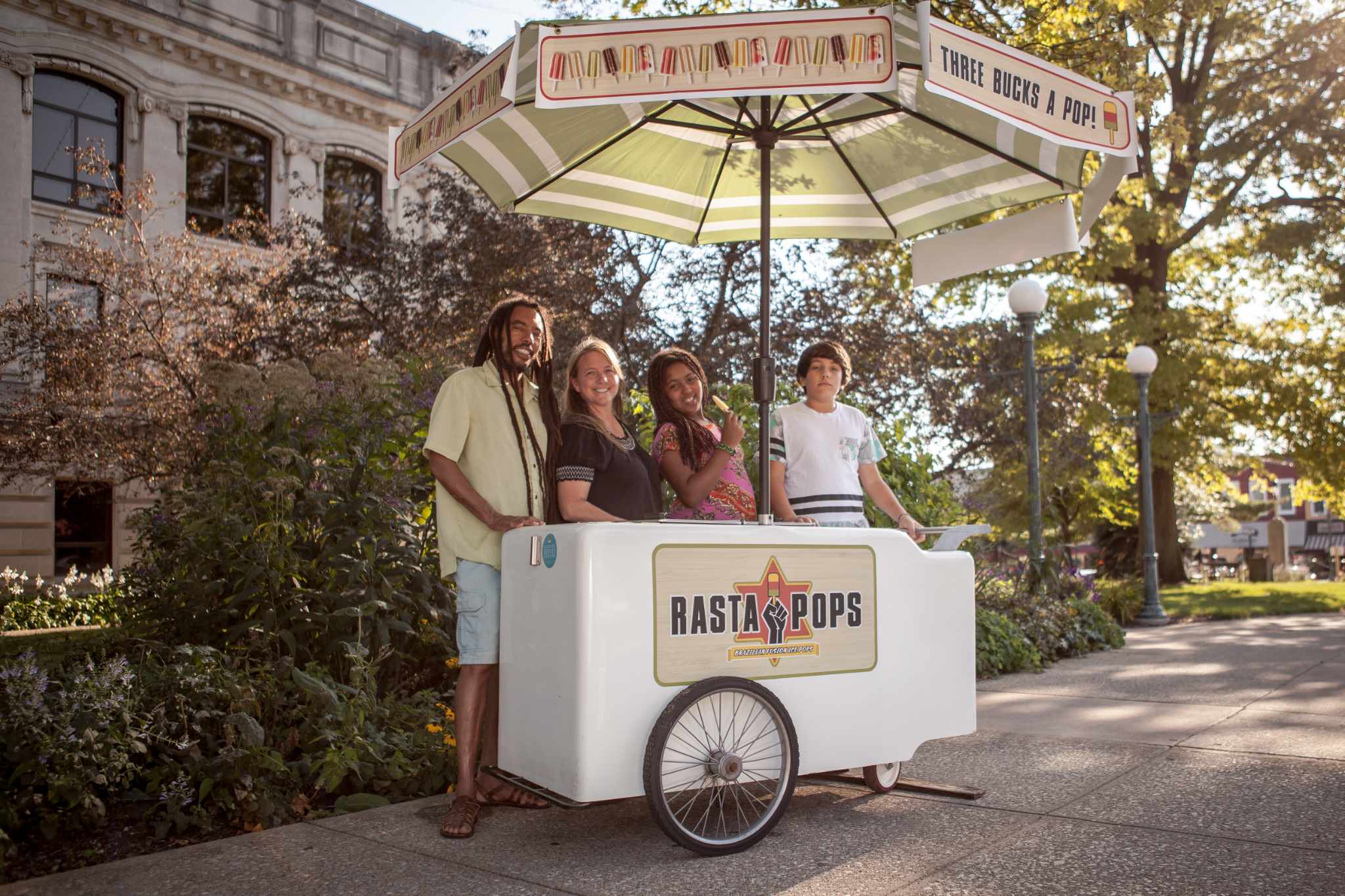
“Mostly it was great. They both had really good school experiences.” In 2015 Linda and Iuri decided to start Rasta Pops, what is now a popular artisan ice pop business. Iuri was teaching capoeira and driving a taxi. In summer time the taxi driving was slow, so he was looking for a summer job. “We were taking a walk through Bryan Park, and he said they need an ice pop seller here. In Brazil it’s really common, just like the ice-cream man in the U.S. That’s one of the best memories our kids have in Brazil. In Brazil they just carry a cooler with a strap on it around their neck. Here you have to have a cart and be able to keep the temperature. You have to have a certified kitchen. We were able to start with a very small investment.”

“At first it was really hard because on top of working at Harmony full-time, I had to help Iuri in the kitchen and get the business side established. It was a big learning curve. It felt like it was two full-time jobs, especially the last month of school (May) and the first month of school (August). And the kids were younger. Now we can hire people to help in the kitchen and to sell pops. It’s doing really well. We get catering events with IU and Food Truck Friday is great now. We do the occasional festival.” Last year they were vendors at Farm Aid in Noblesville, Indiana and Granfalloon, where The Flaming Lips performed free for Bloomington, Indiana. They also participate in Bloomington Pride each year. 

The couple’s other business venture is their vacation rental, Aspen Lake House in Brown County. “We were able to rent our old house. We didn’t want to let it go, but didn’t want the commute (to Bloomington) each day. It stays really well rented I think because of the lake.” The house is beautiful and the property is a great venue with room to hike, canoe, and enjoy the view from the deck, complete with a hot tub. 

On relationships with adult children:

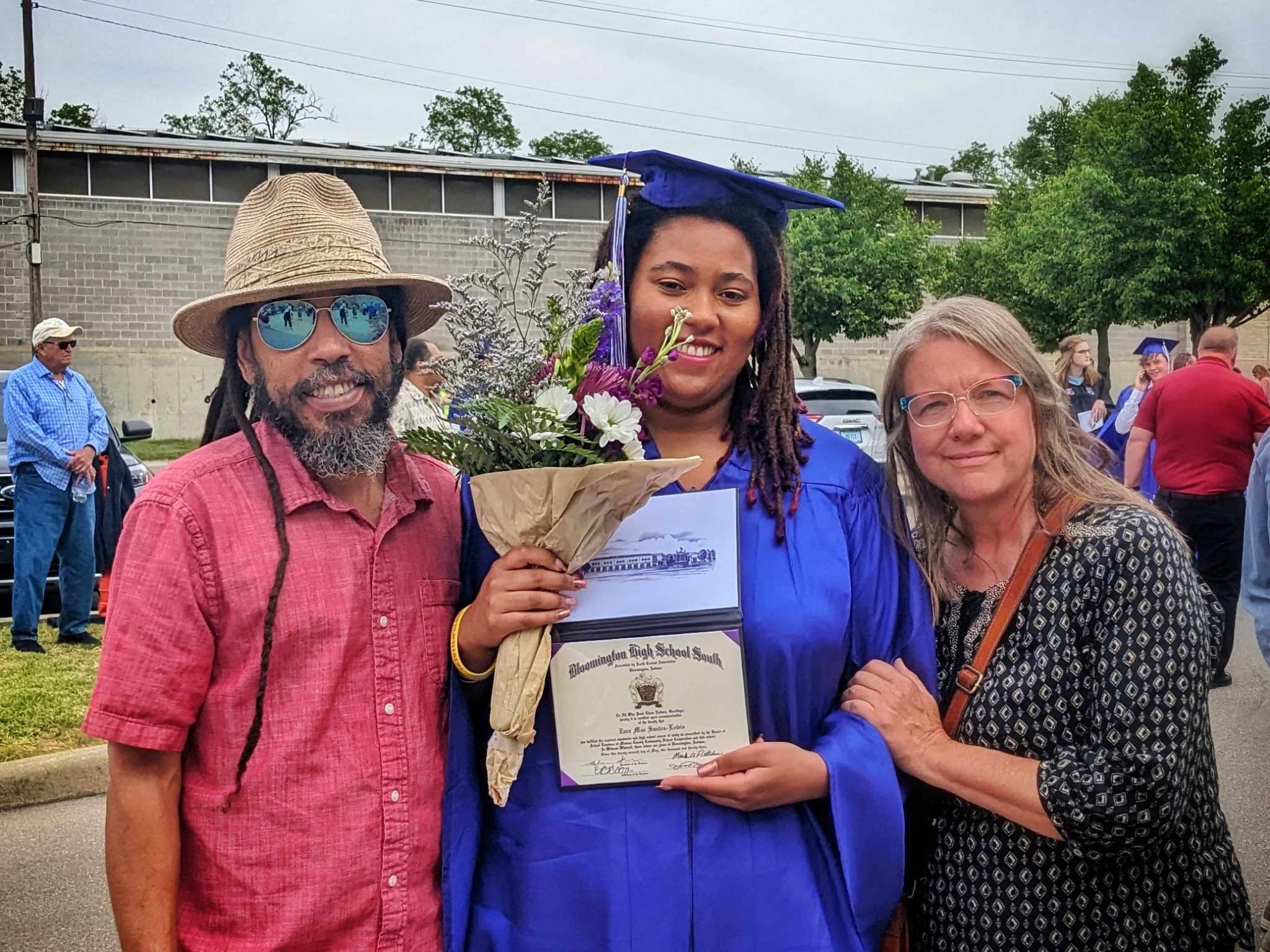
“Geographically we are close to downtown, so our house was always where kids would hang out. I liked that because I like to know who my kids are hanging out with. And I’m pretty hands off. I try to trust them. And now that they’re both over 18 I’m definitely more hands off. My daughter is outgoing and happy and has a lot of friends. She works at IU, providing food service. She still has sleepovers Friday and Saturday, she’s super social.” She’s also adopted her parent’s entrepreneurial spirit. In highschool, she started her own dog walking business. 

Her son is a teacher in the ECP and also plays and studies capoeira. “He fishes, he has a smart, sweet girlfriend. He is enjoying himself right now. Eventually he may want something different. He’s enjoying his life and is making an impact in what he’s doing. From the moment I arrive at school, the kids ask ‘when is he going to be here?’ and ‘what time is he coming?’ They can’t wait to see him. In Brazil, kids typically live at home until they get married. I don’t know what he will choose to do, but I think it will be awesome. I don’t want to push him to study something he’s not interested in. It has to come from him.”

Thank you for sharing with us, Linda!

Happy Halloween- It’s a wonderful day for an interview with Tania Dimick.

If you happen to run into Tania, she’s likely on her way to pick up one of her daughters from school. Or maybe she’s enroute to drop one of them off at voice lessons. If you caught her on her own, she’s likely on her way home from a twelve-hour shift at the Neonatal Intensive Care Unit at the hospital. But she’s never too rushed for a quick check-in or to extend an open invitation for coffee. Her energy is high, her smile is warm, and her kindness is so genuine.

I met Tania when we had children in the same preschool/kindergarten program. At the time, I worked in the office at the school and got to know Tania a little bit. She regularly slipped in the office while fielding calls from one of her teenagers, maybe to turn in a field trip form or tuition payment for her preschooler, usually on her way to her own class. During that time, she was in the middle of getting her second degree. She’d made the decision to go back to school after years of teaching primary education and providing childcare, to study nursing. She was also raising five girls and I couldn’t help but admire her tenacity.

Months went by and like many others, COVID sent our school online when my daughter was in first grade and families made decisions on how to best support their children’s education. I left my position and found a school that supported my daughter’s needs and interests. When I learned that Tania’s youngest children were in the same K6 program as my daughter, I was really delighted. It’s always nice to have a connection to someone in a new place. It felt like running into Tania was an indication we’d find a rich community at my daughter’s new school.

She’s the kind of mom that fills reusable Trader Joe bags to the brim with snacks for the kids at school, she serves hot dogs at PTO functions (even though her and her family are all vegan) without judgment and looks like she must do yoga every day. She makes life look like it moves easily for her. The reality is she works extremely hard and is extremely resilient.

Tania has been an RN in the NICU now for several years. When I ask her about what led her here, it’s a unique story. Bottom line is this mama loves babies. She’s been a mama in all forms. She fostered babies through the entirety of their childhood, has provided surrogacy for another family, had her first biological baby through IUI frozen donor, and had her two youngest with her
former partner. I’m so grateful she shared her story with me.

Tania grew up in Wisconsin in a small community, with her sister, brother, and parents. When she was nine, she remembers standing in front of her farmhouse thinking, ‘I’m going to be here forever.’ Her family lived there for five generations. At nine she was okay with that, but not at 17. “There’s a Reba McEntire song, Is There Life Out There? It would come on the radio, and I’d
start crying. My mom would ask me, ‘what’s wrong?’ And I’d think, ‘I have to get out of here’. There has to be more than this tiny community.”

She spent days playing outside with her siblings, swinging, playing in the sandbox, and swimming. She rode her bike and pink Big Wheel everywhere and didn’t go to the house unless she was bleeding or thought she was dying. “But somehow if Mom knew we were close to the street she’d come flying out of the house.”

On other days, Tania and her sister divided the upstairs rooms of their house and played house together. Their brother was usually cast as the family dog.

A rainy Sunday might mean going to Fleet Farm with her dad or playing pinball with him in the house. When the kids were young, they might spend time riding next to their dad in a car seat in the tractor. Within a few minutes the bouncing would lull them to sleep for the next couple hours. This gave her mom a break. “A flannel that smells like diesel will always remind me of him.”

She had the kind of grandmother that loved to cook for a crowd, could peel an apple with a paring knife in one spiral, and always had at least 14 different kinds of Christmas cookies out during holiday gatherings. Tania remembers, “She never measured. Her biscuit cutter was a baking soda tin. When kids in my family went to college, she always sent ice-cream buckets full of cookies. Years of detective work finally determined how she made the best cookies. It was the Toll House recipe plus two tablespoons of water.”

The whole family was within an hour’s radius. “I miss that my kids aren’t growing up close to family. We used to see my extended family at least once a month, I miss that part for my kids,” she noted.

The family connection is intuitive. Even though she never got to meet her great
grandma, Rose, Tania’s daughter shares her birthday. When Braelyn was young, she had a handful of words, but could always spot a rose and say it clearly. “My grandma loved birds and Braelyn has always had an affinity for birds.”

Tania left home to attend a small college in northern Indiana to get her degree in elementary education. She did a semester abroad in Cambridge. It was a time in her life that had a great impact on her. She fondly remembers living in a house with 18 others, hopping trains on weekends, taking super cheap flights ($20 to $30) to Madrid. Spring Break was spent in Italy and Norway. “I was encouraged to travel by some families I babysat for during college.”

After graduation, she spent a summer teaching English in Hangzhou and Lin’An in China. She distinctly remembers returning to the U.S. two weeks before 9/11. “The conditions where I was living were rough, but we had running water. I think about the food, the smells, the experience, and I’m so glad I went. That made me realize how much was out there. I wanted an adventure.”

In her 20s, Tania and best friend moved to Alaska, looking for an adventure. She was teaching preschool through the day, tutoring at Sylvan Learning Center in the evenings, and waitressing at a steakhouse on the weekends. “We decided to foster when we were in Alaska teaching.” At 26 years old, Tania and her friend were licensed to foster and quickly welcomed sisters, five months old and 16 months old. They came as a six-to-12-month placement, but a year later,
their parents relinquished rights. Tania would raise them. “In Anchorage there is a huge need for care.” She nannied for families, so she could be available for her babies and later started an in-home daycare.

A couple years later she would celebrate the birth of her own baby girl. And would also say goodbye to her best friend who died of cancer. Within a month, she had a birth, a death, and a move from Alaska to Arizona, where her parents and sister had moved. She had a four-year old, a three-year-old, and a newborn.

The result of moving wasn’t what she was looking for. “I was living in a community with mostly retired people. I had a teaching license, but I couldn’t
leave them. My sister was 45 or 50 minutes away. She had an in-home daycare, so I would drive over to hangout. It was hard living there. The first year was really hard, looking back I wish I would have stayed in Alaska for the community and support. My biggest regret was leaving Alaska. I will never again move because someone tells me to. It needs to be for the right reasons and because I want to do it. I stayed a year and a half.”

A friend that lived in Texas, also a single mom, had a newborn and invited Tania and her children to live with her. “I needed to get out (of Arizona), I wasn’t happy. But it fell apart really quickly. My friend had a lot of postpartum depression that went untreated. She went to live with her parents. Outside of Dallas. I was in a new place. I started an in-home daycare. The oldest
was in kindergarten. We’d talk to people. Go to the library and go to the pool.” But Tania was at a low, she didn’t have enough money for rent, or enough to leave.

“One of the dear families from Alaska connected with me. They said, ‘I got you’ and enough was deposited in my checking account the next day. I could get by until my daycare could pick-up. I looked into the surrogacy and got that going. The takeaway from that is that you never know what is going to happen, but things will work out. Through times where I just didn’t know which way to turn, I believed things would work out. If you put good out in the world, good will comeback. Other people have helped me. When I can, I help.”

Back in the Midwest, Tania reconnected with a childhood friend who she married and had two more children with. When her youngest was three years old she decided to go back to school to pursue her nursing study in Bloomington. At the time her children were 3, 5, 10, 13, 14.

Tania attended a job fair before she graduated and happened to get seated with the manager of perinatal at the hospital. She said, “I wasn’t supposed to be here interviewing today, and we just started talking.” She offered Tania the position during the fair.

Fast forward three years, Tania is a single mama again and has worked in the NICU since graduating. I can’t think of a better person to care for babies and help NICU parents. “Some parents are there for a short time, some are there for weeks and weeks and you really start to get a connection with them. It’s the hardest when you see a parent who has had a perfect pregnancy and then something didn’t go right. Those are the most shocking.”

With these parents, she can foster a connection by relating to her own parenting experience and pulling grounding tools from her own journey. She can assure parents the four-month regression thing is real, “Just when you think you have the schedule down, everything changes.” She also swears by the soothing benefits of water to calm a baby. “Water can always help, put them in a bath, put a cold washcloth on them. Every time there is a meltdown what comes to mind is water.”


When I ask Tania how she balances the stress of the NICU and being a present parent, she explains. “Work has always been separate. I’m glad I don’t have babies now. I didn’t know I would be going right into the NICU. I work nights, it’s a different vibe and works out better for my work/life balance.”

“I fall into a weird age gap and mothering time with my co-workers. There are some nurses in their early 20s, just married or not yet married, then some that have been around a long time whose kids are grown. It’s nice to work with moms that have kids, they really get it. Sometimes our kids will have a travel basketball game or dance recital to get to and we help each other out. We all have different needs.”

Tania’s oldest foster children are now grown. The three youngest girls are at home and there’s always plenty of drama in the best possible way. “I can’t imagine having a boy at this point. Since 7th or 8th grade, I always thought I’d be a mama to all girls. Someone is always looking for something. They are always amazed I know where everything is. They always know I’ll find
it.” They also prioritize open communication. “You can talk about negative feelings here. I grew up talking about happy things, you didn’t rock the boat.”

Tania’s dedication to a healthful and mindful diet reflects her intentional parenting style. Her family has followed a vegan diet for 10 years now. “It is much easier now, than it was 10 years ago. And there is more awareness. Ten years ago, I was trying to find ingredients. I had to make everything from scratch. I kept a binder of recipes and was Googling recipes all the time. I
made our own peanut butter; I made bean and seed burgers. For Thanksgiving, handmade seitan loaves. Initially it was a good creative outlet. At the time it didn’t seem like so much work. After years of babies and kids it really got my mind going.”

“Braelyn would bring avocados to school for lunch and some of the kids had never seen them before. One friend’s mom called and said her kid asked for them. I would make a batch of cupcakes and put them in a freezer at school, so when kids bring in cupcakes for birthdays my kids could have one too. Over time it’s become easier. The youngest have always been vegan. Moving into Bloomington’s school district, it was more normal and accepted. Our friends have Nacho Night several months out of the year. They invite friends in, and they always have vegan cheese. Even going to Bradford Woods or camps, they always have options now. Sometimes it takes planning ahead. For a long time, it was impossible to go out at restaurants, but now you can get it just about anywhere, corn dogs, pizza.”

Another piece of her parenting style that strikes me, is her fluidity. She isn’t a fan of big plans and presses the point that sometimes the impromptu experiences for children are best. “This summer I tried to plan a fun day for us. We went down to the caverns and ziplines in southern Indiana. It was a couple hours away; we could do it all in one day. We had this all planned out. It rained the night before. The ziplines were closed, everything was wet, but we were like, ‘we’re still here, we can do the caverns.’ Halfway through the caverns, a lady comes running through and says, ‘we’re evacuating the entire park.’ There’s one road that crosses this lowline bridge over a river to get into the park and the water was rising so fast we all had to evacuate.

“We started driving back from southern Indiana and the kids asked if we could go to Nashville. We got slushies and went to the toy store and they each got to pick out something, then the candy story. While we were at the candy store, the tornado sirens started going off. So, we went back to the car and started driving back to Bloomington. We get to the edge of town, and realized we weren’t going to beat the storm.” Tania called a friend who was less than a mile from where they were and went to their house. The kids waited out the storm in their friend’s closet. So much for planning the perfect day.

Sitting at her patio, while watching Willow, her youngest, run through the yard in her butterfly wings while giggling, and listening to her 10-year-old, Lyra, belt out Taylor Swift lyrics with my own daughter, I can’t but love all the amazing girl energy here. It’s such a joy to witness the connection Tania has with her girls, and the girls have witnessed their mom do a lot of hard work over the years. “Life is not exactly what I envisioned. They always ask me what I wanted to be when I grow up, and I tell them, ‘I truly wanted to be a mom’. They are the most important things to me. My kids have truly kept me going.”

Thank you for sharing your beautiful story with us, Tania!

Hello World!

Wonderfully Woven invites parents from all walks of life to share their unique parenting experience. We offer support by sharing different perspectives, through interviews and storytelling. 

Parenting is my favorite thing in the entire world. I’ve learned to love in a way I never knew was possible over the last 20 years. And one thing that always fascinates me, is that no matter what our core differences are, every time I meet another parent we usually find common ground through telling stories about our own kids. It becomes clear how we love them, how we fumble around, and mostly that we are all just trying to do the best we can do for them.

We’ll focus on everything from birth stories, to tween and teen angst, and ever evolving relationships with adult children. We’ll share stories that are authentic, sometimes difficult, and many times fun. My hope is that this little spot will entertain, inspire, and foster lots of love. 

My first post, an editorial written by my very own mama, was published in my hometown newspaper in 1982. In many ways her approach to parenting is much different than mine, but it’s still relatable. She’s been married to my dad for 58 years, they raised six kids on a farm in northern Indiana. She ruled with an iron fist most of the time, but makes the best chocolate zucchini cake, can sew a pleat in a cheerleader’s skirt like nobody’s business, took endless school board calls, and will always have an open door for a kid who needs a safe space. 

Unlike my mom, I am a single parent, raising my kids in a college town. I don’t drive a tractor or can my own food, I drive a Honda to pick up Chinese take-out on my way home from my job on campus. I try to be authentic with my kids, and often find myself allowing them to make many of their own decisions, often successfully, and sometimes really successfully after a few mistakes were made. We’re learning as we go.

I will always be inspired by her love, tenacity, and pink strapless terry cloth jumpsuit she wore home from the hospital, after giving birth to my youngest sister. 

I love this article because it’s beautiful and was a great creative outlet for my mom, while she was in the thick of parenting. In many ways that is what this blog is for me.

Judy Berenda: Experiences as a Farm Wife in 1982 and how the Role has Changed.

By Judy Berenda

My most pleasant memories of early childhood were spent in a huge old gray house on my great grandfather’s farm. I would sit next to my grandmother and snap green beans, shell peas, or swing on the porch swing. She would tell me stories about cooking for thrashers, hired men that lived upstairs during harvest, and money problems during the great depression. There were always dogs, cats, baby chickens, baby calves, and mean bulls. There was a broken tractor, a drunk hired man, or a bad snowstorm to contend with. Grandpa could take care of everything. Dad and my uncle farmed the “home place” and some rented land. As time passed a baby sister and a pony completed our farm family. Sisters and ponies are alike in the fact that they both behave when one’s mother is around! On summer days I sat in my secret apple tree hide-out and knew life couldn’t be better. We weren’t rich but life was secure. I would grow up and become a cowgirl; I would be the boss on a ranch.

As I approached adolescence my horizons expanded. My classmates and I went to a larger school. Dad rented more ground, and we moved. I learned farm life was hard work, I watered hogs, fed 4-H steers, mowed the yard, and learned how to cook and sew. We also had fun. Any lunch could turn into a picnic, I still had my apple tree hide-out and good friends were only a bike ride away. Country church bells on a clear Sunday morning assured me life was good . Late at night I could hear Mom and Dad talking; changes were ahead. My parents bought a farm close to the “home-place” and we moved. Dad saw an opportunity working in town, so he rented out his beloved land. The January morning of our farm sale I went to school hoping I would die that day. How could my parents throw away the glory of tilling the land? I didn’t realize they were changing their lifestyle to better their family farm.

As I became a teenager I decided that farm women were dull and old fashioned in their cotton dresses. I was sure driving a pick-up truck wasn’t for me. I would save the world but would note be bored by feeding it. I went through my teenage years and married a guy just as idealistic as myself. The Vietnam War was raging and our best friend was killed in the service. When my husband left for Ft. Leonard Wood my life was chaotic. I returned to the family farm. The land had become more serene and beautiful than I remembered.

Our first child was born; Dick returned to college and the farm. I began working in the field and I knew my life was perfect. Our second daughter was born and I was back on the tractor in four days. The babysitter would hang out a flag when it was time to feed Melissa. Dick and I grew from our mistakes, life couldn’t be better! Our first boy came in a January storm. Dick slept through his son’s birth because he was tired from delivering baby calves. I didn’t feel neglected because the cows demanded his time, it was a fact of farm life.

The next two children came and I know I was meant to be a farm wife. Two days before Natalie was born we finished plowing the “home place.” I got off the tractor and picked up a handful of rich black dirt. I was once again humbled by the partnership between God and farm people. Just like the three generations of farm women before me the land is my second love. We will fight floods, hail, drought, Japanese beetles, and Uncle Sam’s estate tax, but we will survive!

Farm families are shrinking in numbers yet we are producing more and more food. As a farm wife I shudder to see trees cut down and not replaced, fences torn out, ground farmed ditch to ditch, and empty barns. Where are the stewards of our soil?

At our farm, days begin early and often supper is late. My daughters help me snap beans, shell peas, and can or freeze our own fruits and vegetables. The girls are also dancers, guitar players, ball players (unheard of in Grandma’s youth), and cheerleaders. As they groom their 4-H calves they dream of dancing on Broadway or becoming veterinarians. There is still a secret place in the tree at the “home place.” Our 8 and 10 year old son’s Collie dog is running toward the house. Before I heard their story I knew they had encountered a skunk!

Like generations of farm women before me I am unemployed, as I cook for numerous people, have a hospital for pets, clean a large house, play in the hay with my children, mow, fish, roam the land, and help them ride their pony. They rejoice at the birth of kittens and cry at the death of a pet rabbit. They learn of nature the hard way. Even as I write this I see Wade in the future, in his farm house. But now I’m mowing huge yards, working long hours in the fields, and provide chauffeur service. Sometimes I am resentful. I wonder what a 40 hour work week and a regular paycheck would be like. Then early one morning I look at the corn peeking through the ground, or smell fresh cut hay, or help my husband dry off a newborn calf and again I am humbled. Tears come to my eyes and I know what life is all about.

Yes, I drive the pick-up to town in my old jeans and boots. I worry about poor grain prices, high interest rates, and the weather. The farm is not a place for all women; you must become a partner to the man you love. I will encourage my children to look into other occupations as they grow older. Some, perhaps all of my daughters will leave the farm, but like their mother some will return. Farm wives’ roles will continue to expand. We will see more farms and ranches run by women. My grandmother is gone now but not forgotten. One day I will sit on a porch swing with my granddaughter and form that special bond we farm women have to hold onto the “home place.”